A Practical Framework for Industrial, Laboratory and Institutional Buyers
Chemical supply is rarely the most visible part of an organisation — but it is one of the most critical.
Across Malaysia, factories, laboratories, water treatment facilities, healthcare environments and institutional operations rely on chemicals daily. They power production lines, enable accurate testing, maintain hygiene standards, and support quality assurance systems.
Yet many procurement decisions are still made based on short-term pricing comparisons.
That approach overlooks something far more important: operational risk.
This guide brings together practical insights for businesses that want to choose the right chemical supplier, select the correct grades, manage storage safely, and plan supply strategically for long-term growth.
Why Chemical Supply Is a Strategic Decision — Not Just a Purchase
In industrial environments, even a short disruption in chemical supply can halt production. In laboratories, using an incorrect grade can invalidate results. In regulated industries, missing documentation can trigger audit findings.
Chemical supply affects:
- Production continuity
- Regulatory compliance
- Workplace safety
- Product consistency
- Business reputation
When evaluated correctly, a supplier becomes a stability partner — not just a vendor.
For businesses sourcing industrial chemicals in Malaysia, this distinction is especially important given the regulatory landscape and supply chain variability in the region.
Part 1: How to Choose a Chemical Supplier in Malaysia
1. Start With Documentation Readiness
Before discussing price, confirm whether the supplier can consistently provide:
- Updated Safety Data Sheets (SDS)
- Certificate of Analysis (COA) where applicable
- Technical Data Sheets (TDS)
- Product specifications and hazard classifications
In manufacturing and laboratory environments, documentation is not optional. During audits, inspectors often request SDS files immediately. Delays or missing documents reflect poorly on the buyer — not just the supplier.
A structured supplier maintains organised documentation systems and responds quickly to compliance queries.
2. Evaluate Storage & handling Standards
Chemical integrity begins long before delivery.
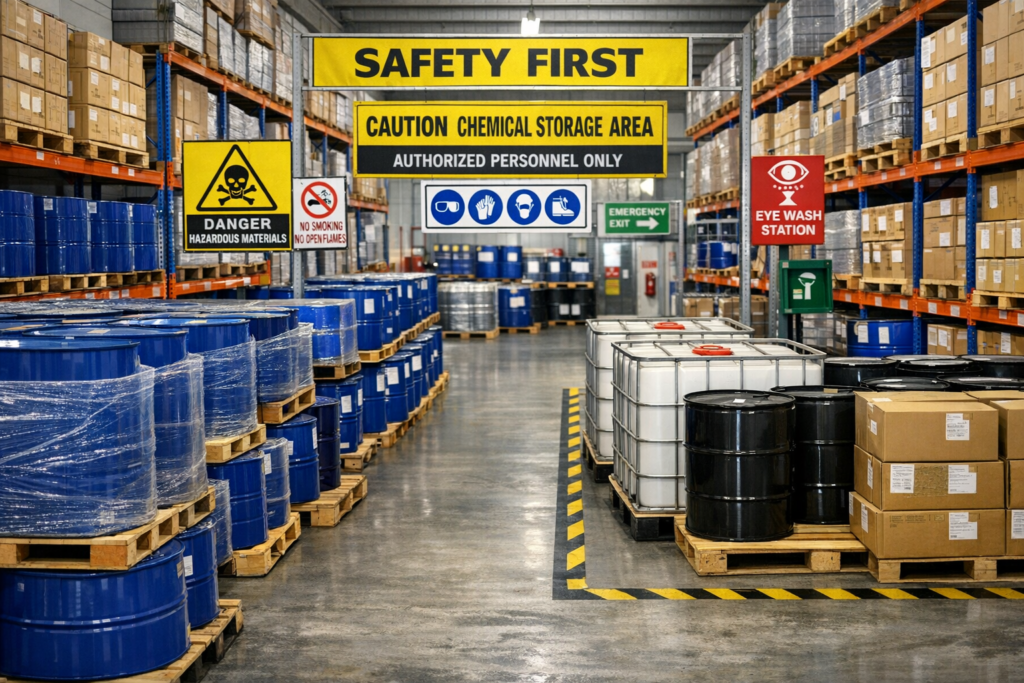
Improper storage — excessive humidity, poor ventilation, inadequate segregation — can degrade product quality. Buyers should assess whether a supplier:
- Stores chemicals in dry, controlled environments
- Segregates incompatible materials
- Implements stock rotation systems (FIFO)
- Maintains safety compliance within warehouse operations
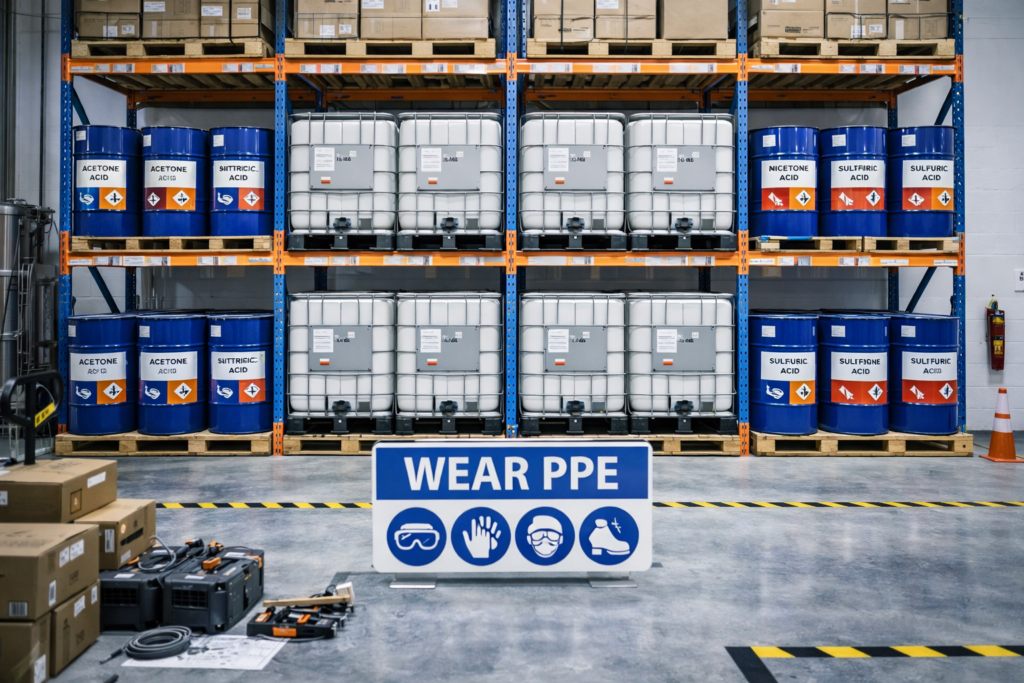
For buyers requiring laboratory reagents and analytical chemicals, proper storage conditions are even more critical.
3. Assess local Availability & Lead Time
In recent years, supply chain disruptions have highlighted the importance of local stock availability.
Suppliers that maintain ready inventory within Malaysia offer:
- Faster lead times
- Reduced dependency on overseas shipments
- Lower disruption risk
Factories operating on tight production schedules cannot afford uncertainty.
4. Look for Technical Guidance – Not Just Sales
A capable chemical supplier should be able to advise on:
- Grade suitability
- Application compatibility
- Safe handling considerations
- Cost-performance optimisation
If a supplier processes orders without verifying application requirements, it may indicate limited technical involvement.
For businesses in therapeutic or personal care manufacturing, correct grade selection is particularly important due to regulatory expectations.
Part 2: Understanding Chemical Grades — And Why It Matters
Choosing the wrong chemical grade is a common and costly mistake.
Different applications demand different purity levels.
Industrial & Technical Grade
These grades are typically suitable for:
- Cleaning processes
- Water treatment
- Manufacturing applications
- General industrial use
They are cost-effective and appropriate when ultra-high purity is not required.
Laboratory Reagent (LR)
LR chemicals are used for:
- Routine laboratory procedures
- Educational institutions
- Basic quality control testing
They offer higher purity compared to industrial grades.
Analytical Reagent (AR) & ACS Grade
These grades are used when precision matters:
- Analytical testing
- Pharmaceutical labs
- Research facilities
- Regulatory testing environments
Using industrial-grade chemicals for analytical testing may compromise results. Conversely, using AR grade unnecessarily increases cost.
Correct grade selection balances compliance, accuracy, and financial efficiency.
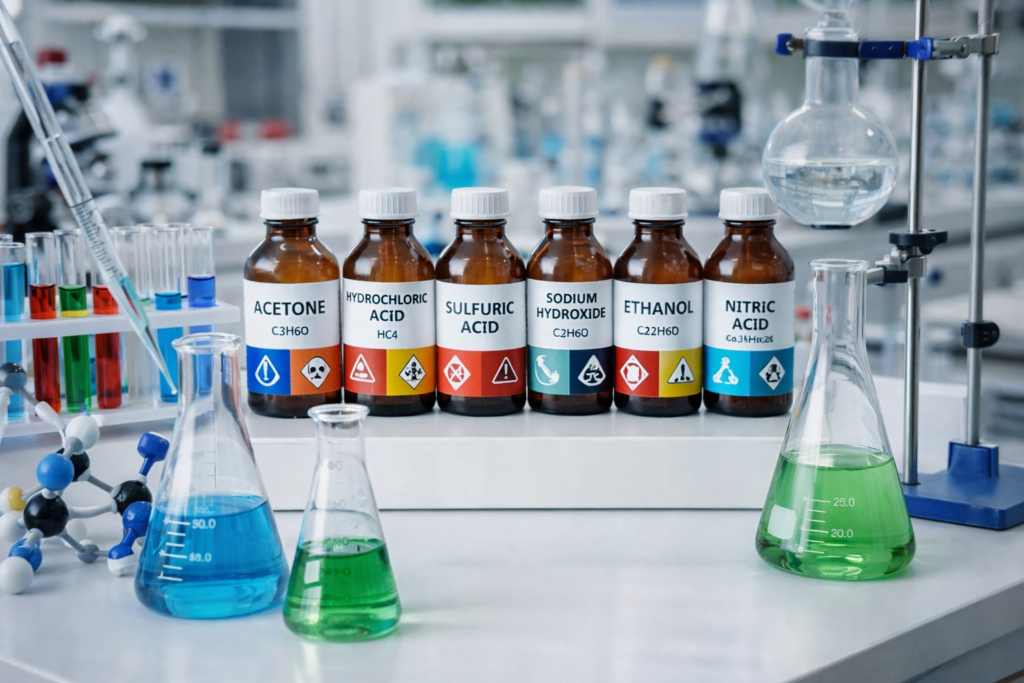
Part 3: Safe Chemical Handling & Storage in Malaysian Operations
Chemical safety protects:
- Employees
- Infrastructure
- Product quality
- Corporate liability
Regardless of industry, basic principles apply.
Segregation of Incompatible Chemicals
Acids should not be stored with bases. Oxidisers should be kept away from flammable substances. Reactive chemicals require separation.
Improper segregation can cause dangerous reactions.
Environmental Control
Where required, storage areas should maintain:
- Controlled temperature
- Low humidity
- Proper ventilation
Some chemicals degrade under poor environmental conditions, affecting performance.
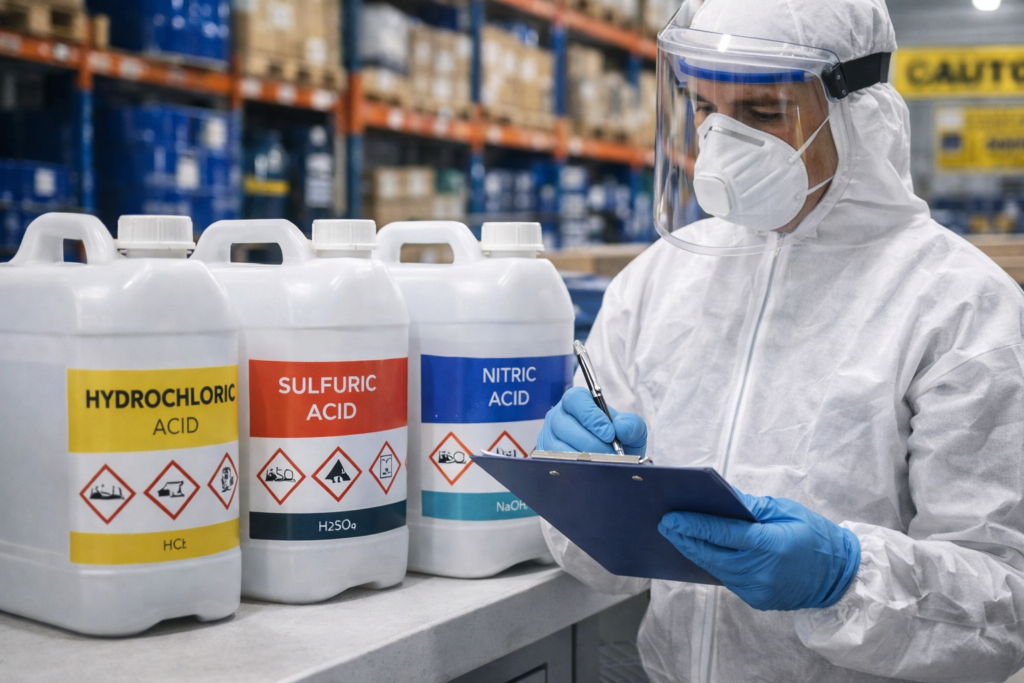
Clear Labelling & Accessibility
Every container must be clearly labelled. SDS files should be accessible to staff. Training programs should ensure employees understand handling procedures and emergency response protocols.
Part 4: Planning Chemical Supply for New Production Lines
When expanding operations or setting up new facilities, chemical planning should be integrated early.
Too often, chemical procurement is considered only after production equipment is installed.
A structured planning approach includes:
Identifying All Required Chemicals
- Process chemicals
- Cleaning agents
- Maintenance chemicals
- Testing reagents
Estimating Consumption Rates
Accurate usage forecasting prevents:
- Understocking
- Overstocking
- Cash flow strain
- Storage overflow
Structuring Delivery Schedules
Scheduled deliveries reduce storage pressure and improve operational predictability.
Long-term agreements may provide stability in both pricing and availability.
Part 5: Essential Documentation Every Buyer Should Request
Professional buyers should consistently request:
- Safety Data Sheets (SDS)
- Certificate of Analysis (COA)
- Technical Data Sheets (TDS)
- Product specifications
For regulated sectors, batch traceability may also be required.
Documentation is protection — not paperwork.
Bringing It All Together: Building a Stable Chemical Supply Framework
Selecting and managing chemical supply is ultimately about risk control.
The right supplier supports:
- Compliance readiness
- Consistent product quality
- Reliable logistics
- Technical clarity
- Scalable growth
In Malaysia’s evolving industrial environment, businesses that treat chemical procurement strategically are better positioned to grow confidently.
A dependable chemical partner becomes part of your operational foundation — ensuring that your production, testing, and service delivery can proceed without unnecessary disruption.