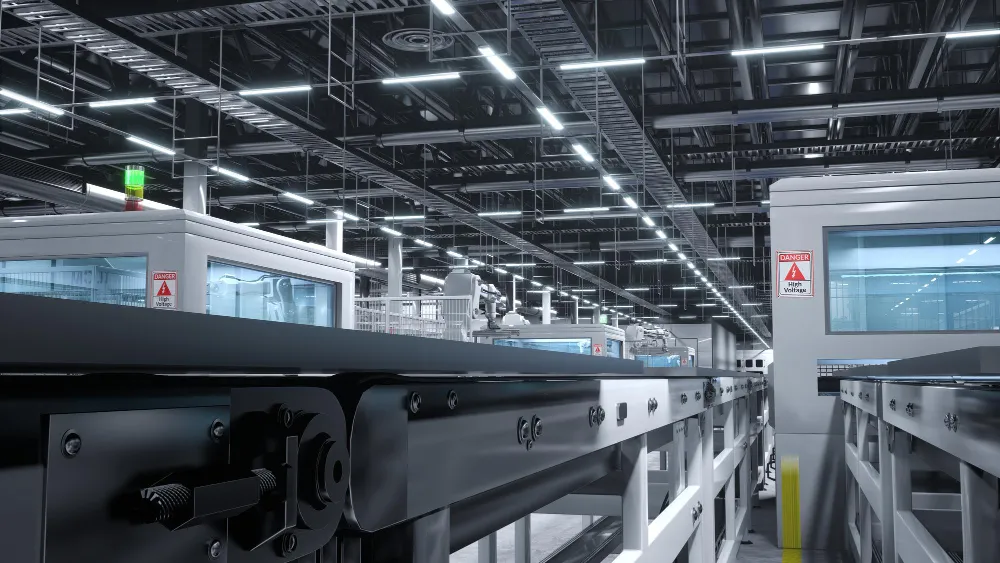

In any facility that handles chemicals — whether a manufacturing plant, laboratory, healthcare facility or institutional operation — safety is not optional.
Chemical handling and storage practices directly affect worker safety, product integrity, regulatory compliance, and corporate liability. Yet incidents still occur not because companies lack chemicals — but because they underestimate the importance of structured storage systems and disciplined handling protocols.
In Malaysia, regulatory enforcement and workplace safety awareness continue to strengthen. Businesses that fail to implement proper chemical management practices expose themselves to operational disruption, audit findings, and reputational damage.
This article outlines the essential principles every industrial and laboratory operation should follow.
Why Chemical Storage Is a Risk Management Issue
Chemical storage is often treated as a logistical matter — where to place drums, how many racks are needed, how much floor space is available.
In reality, it is a risk management system.
Improper storage can lead to:
- Accidental chemical reactions
- Fire hazards
- Environmental contamination
- Worker injury
- Product degradation
- Audit non-compliance
A structured chemical storage framework reduces these risks significantly.
For businesses sourcing industrial chemicals in Malaysia, storage planning should begin even before delivery.
Segregation of Incompatible Chemicals
One of the most fundamental rules in chemical storage is segregation.
Certain chemicals should never be stored together. For example:
- Acids and bases
- Oxidisers and flammable materials
- Reactive chemicals with organic solvents
When incompatible chemicals are stored in close proximity, even minor leakage or accidental mixing can result in hazardous reactions.
Proper storage areas should include:
- Clearly marked segregation zones
- Physical barriers where necessary
- Updated compatibility charts
- Staff training on storage categories
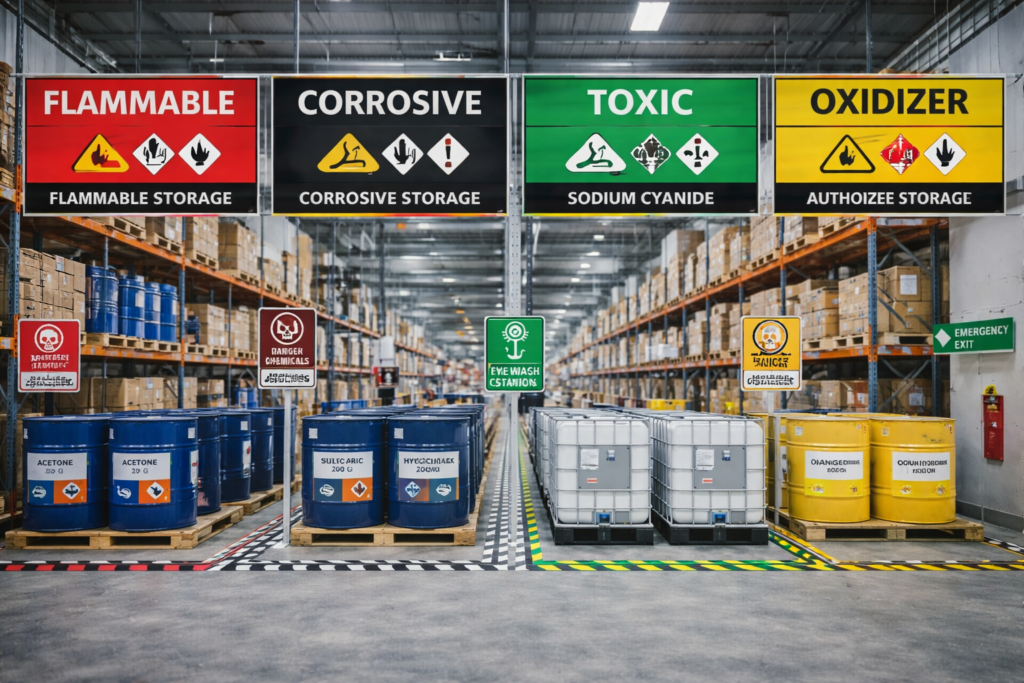
Segregation is not about space efficiency — it is about preventing avoidable incidents.
Environmental Control: Temperature, Humidity and Ventilation
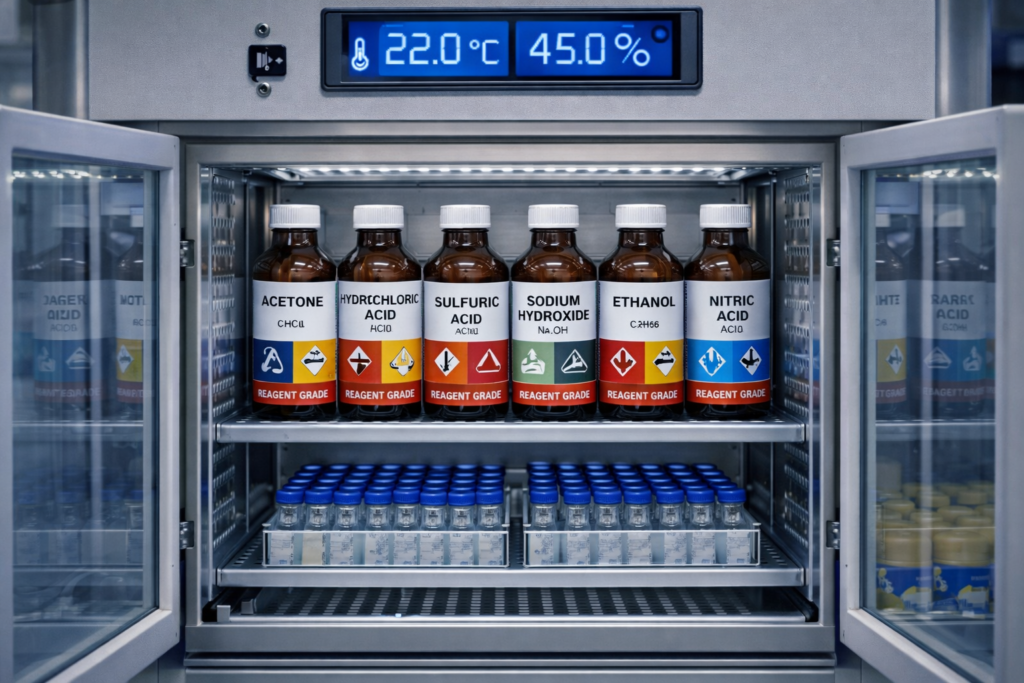
Malaysia’s climate presents additional challenges. High humidity and heat can affect chemical stability, particularly for hygroscopic substances or volatile compounds.
Facilities handling chemicals should ensure:
- Dry storage areas
- Adequate ventilation
- Temperature monitoring where required
- Protection from direct sunlight
Failure to control environmental conditions may result in:
- Product degradation
- Reduced effectiveness
- Increased safety risk
For laboratory reagents and analytical chemicals, environmental control is especially important.
Proper Labelling and Documentation Accessibility
Clear labelling is a non-negotiable requirement.
Every container must display:
- Chemical name
- Hazard classification
- Handling warnings
- Date received
- Batch identification (if applicable)
Labels must remain legible throughout the storage period.
In addition, Safety Data Sheets (SDS) should be readily accessible to employees. During inspections or emergencies, quick access to SDS information is critical.
Documentation is not merely for audit preparation — it is for real-time safety decision-making.
Handling Procedures and Staff Training
Even the best storage systems fail if handling practices are inconsistent.
Employees should be trained on:
- Safe transfer procedures
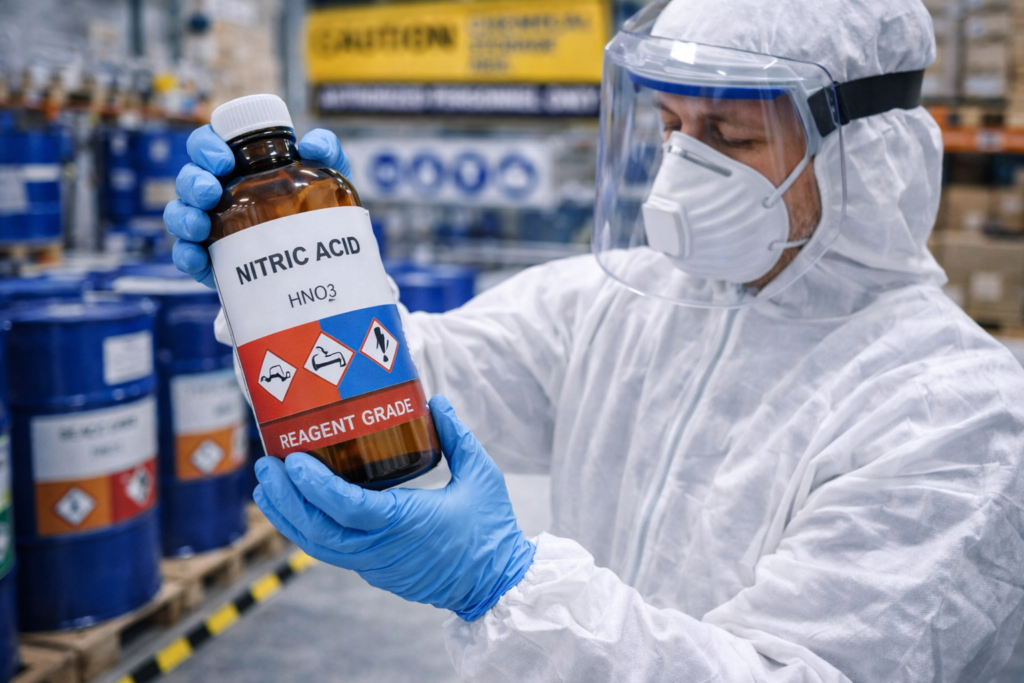
- Use of appropriate personal protective equipment (PPE)
- Spill containment protocols
- Emergency response procedures
Training should be continuous — not a one-time orientation exercise.
In regulated sectors such as therapeutic or personal care manufacturing, training documentation may also be required for compliance.
Spill Management and Emergency Preparedness
Spills are not always avoidable. What matters is preparedness.
Every facility should have:
- Spill kits appropriate to chemical type
- Neutralising agents where required
- Containment tools
- Clear emergency escalation procedures
A documented spill response plan reduces panic and limits damage.
Regular drills ensure staff understand their responsibilities during incidents.
Inventory Control and Stock Rotation
Overstocking chemicals increases risk exposure. Expired or degraded chemicals can compromise performance and safety.
Facilities should implement:
- FIFO (First In, First Out) rotation
- Regular stock audits
- Clear expiry tracking
- Disposal protocols for obsolete chemicals
Inventory management is part of safety management.
Storage Infrastructure Planning for Growing Businesses
As operations expand, chemical storage needs evolve.
Common growth-related mistakes include:
- Expanding production without expanding storage compliance
- Using temporary storage spaces without proper safety controls
- Mixing incompatible chemicals due to space constraints
Businesses planning facility expansion should integrate chemical storage design into overall infrastructure planning.
This includes:
- Segregation layout design
- Ventilation planning
- Hazard classification zoning
- Fire safety considerations
Storage planning should scale alongside production capacity.
Compliance Awareness in Malaysian Context
Malaysia enforces occupational safety and health standards across industrial sectors. Inspections may focus on:
- Chemical storage compliance
- Documentation availability
- Hazard communication
- Employee safety measures
Businesses that maintain structured storage systems are better prepared for regulatory reviews.
Compliance is not simply about avoiding penalties — it reflects organisational maturity.
The Role of a Responsible Chemical Supplier
Chemical safety does not begin at your facility — it begins at your supplier’s warehouse.
A professional supplier should:
- Store chemicals in controlled environments
- Segregate incompatible materials
- Maintain documentation accuracy
- Provide clear handling guidance
When evaluating a supplier, asking about their internal storage standards is entirely reasonable.
The stability of your supply chain depends on the stability of theirs.
Bringing Safety Into Daily Operations
Safe chemical handling is not a one-time project. It is an ongoing discipline.
Organisations that treat chemical storage and handling as a core operational system — rather than a background function — reduce:
- Workplace accidents
- Product failures
- Audit findings
- Insurance exposure
- Operational disruption
Safety is not just compliance. It is operational resilience.
Final Thoughts
Chemical storage and handling practices form the backbone of responsible industrial and laboratory operations.
In Malaysia’s industrial environment, businesses that prioritise structured storage, environmental control, staff training, and documentation readiness position themselves for long-term stability.
Chemical management should not be reactive — it should be designed, documented, and disciplined.
When done correctly, safe handling and storage protect your people, your products, and your reputation.